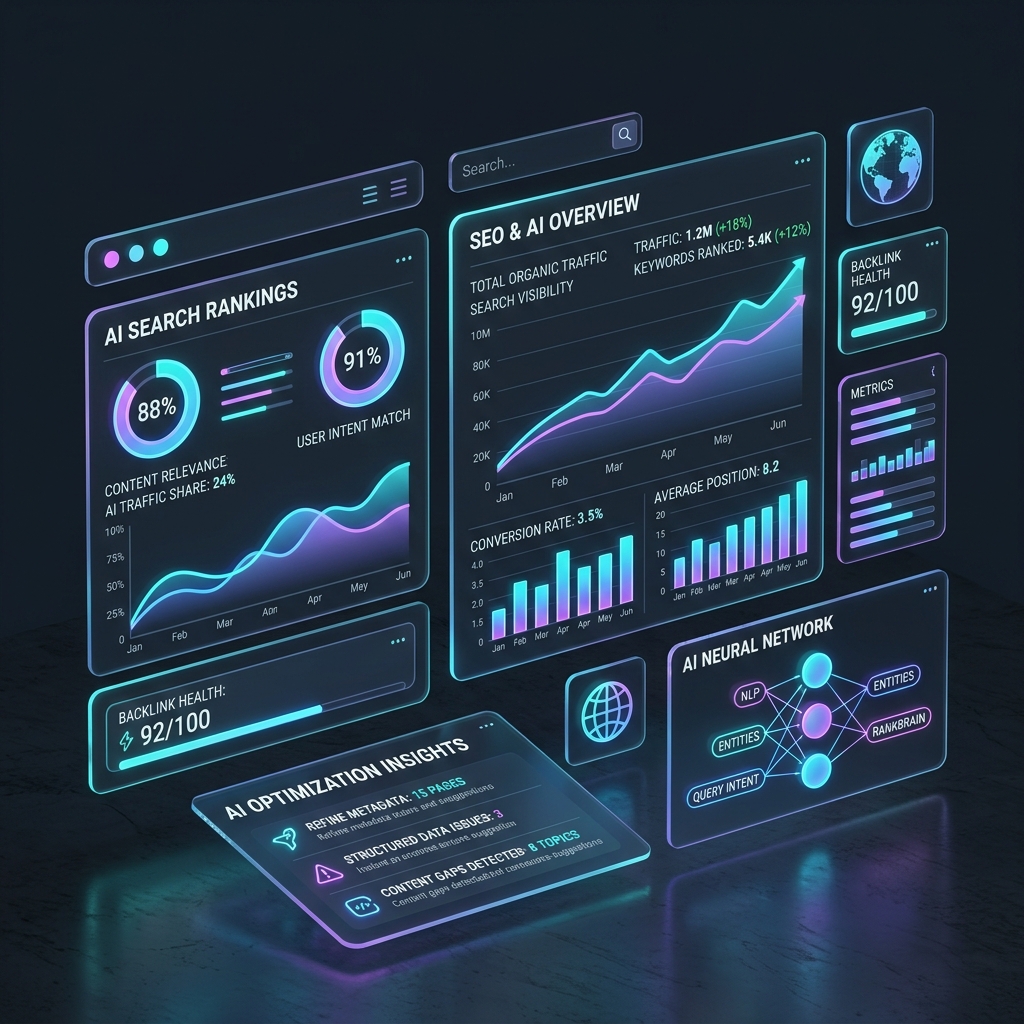
SEO & AI Search
Optimisation Agency
We build modern, technically superior search strategies. We don't just optimize your website to rank in traditional Google search results; we make sure your business is cited and recommended by search models like ChatGPT, Gemini, and Claude.
TLDR Summary
Astral Media's SEO & AI Search Optimisation (GEO) program coordinates modern technical audits, structured schema injection, entity-association maps, and conversational answering frameworks. Our target is twofold: secure #1 positions on traditional search engine results pages (SERPs) and maximize high-intent brand recommendations inside generative AI platforms.
Traditional SEO vs. Generative AI Search
Traditional web searches rely on exact-match phrases and domain strength to rank lists of links. AI search engines synthesize content dynamically to answer conversational questions directly, embedding clickable reference citations.
Traditional Search
Google Index & Crawlers
- ✕ Keyword Matching: Relies heavily on exact search terms and high query density.
- ✕ List-of-Links Layout: Standard Search Engine Results Pages (SERPs) list ten blue links.
- ✕ Information Silos: User must open multiple websites to synthesize the answer.
- ✕ Declining Click Share: Zero-click search results have risen as Google answers queries on-page.
Generative AI Search
ChatGPT Search, Gemini, Perplexity
- ✓ Semantic Intent: Interprets the conversational meaning and context of user requests.
- ✓ Direct Synthesized Answers: Generates immediate prose containing summaries and tables.
- ✓ Citations and References: Cites authoritative, trusted sources within the text response.
- ✓ Brand Mentions (GEO): Optimizes content parameters to appear inside citations and recommendation lists.
SEO & AI Services We Provide
From fixing backend crawl issues to mapping your brand entity structure for search bots, we cover the full spectrum of modern search optimization.
Generative Engine Optimisation (GEO)
Formatting facts, statistics, and tables clearly so AI engines (like OpenAI Search) pull your content to synthesize answers and generate link citations.
Semantic & Schema Integration
Implementing advanced JSON-LD schemas (FAQ, LocalBusiness, Breadcrumb, Product) to help search engine crawlers map and index metadata structure.
Entity Profile & Authority Map
Establishing your business's presence across high-authority third-party platforms and directories to build contextual credibility for search agents.
Core Technical SEO Audit
Minifying scripts, improving page speed, debugging crawl blocks, fixing redirects, and configuring XML sitemaps to optimize Google Search Console indexing.
Competitor Citation Gap Analysis
Finding search search terms and queries where competitors are referenced by AI models or ranking on Google, and designing content strategies to capture them.
Continuous Content Optimisation
Iterative optimization of site blogs, case studies, and services copy to answer new high-intent user queries dynamically discovered via performance analytics.
Does Your Business Need AI SEO?
If your target customers search for solutions, products, or services online, they are already using Google and conversational AI agents. Standing out requires moving beyond traditional keywords.
Why traditional SEO alone is falling behind:
1. Conversational Queries are Longer
Users don't just type "Dublin web designer" anymore. They type "Find a local Swords web design agency that handles secure databases and has 5-star Google reviews." AI search synthesizes long-tail intent queries.
2. Zero-Click Search Dominance
By answering queries directly on the search page using generative summaries, engines are bypass clickthrough links. The goal is to be the source engine citations pull from.
3. The Rise of LLM Search Engines
Millions of professionals use ChatGPT Plus or Claude Pro as their primary research assistants. If your site isn't readable by their specific crawlers, you don't exist in their answers.
SEO & AI Readiness Audit
Review the checklist parameters below to see the critical areas we assess to prepare your website for the next generation of search.
1. Core Technical SEO
Reviewing page speed, layout shifts, and execution times to ensure Lighthouse scores above 90.
Checking HTTPS validity, secure cookie configurations, and security headers.
Validating robots.txt structures, sitemaps, and indexing restrictions.
2. Semantic & Entity Content
Identifying and defining clear context for target brands and entity topics within copy.
Structuring headlines and text chunks to match direct user search questions.
Ensuring clean semantic links connect relevant service clusters.
3. Schema & Structured Data
Validating JSON-LD geocoordinates, address arrays, and branding points.
Deploying active FAQ, reviews, articles, and product markup blocks.
4. AI & LLM Search Readiness
Reviewing crawlers directives to ensure GPTBot, ClaudeBot, and Google-Extended access.
Ensuring answers include statistics, lists, and direct Q&A arrays for AI citation fetches.
Verifying profile alignment on high-authority directories to strengthen AI context.
SEO & AI Optimisation FAQs
Still have questions about how AI optimization works? Explore our detailed breakdown below.
What is Generative Engine Optimisation (GEO)?
GEO stands for Generative Engine Optimisation. It is the practice of structuring content, database entity values, and domain authority to ensure that generative AI models (like Google SGE, OpenAI SearchGPT, and Perplexity) pull, summarize, and cite your website when formulating conversational answers for users.
How does AI search optimization differ from traditional SEO?
Traditional SEO focuses heavily on backlink volume and query frequency matching to rank in link indexes. AI Search Optimization prioritizes entity mappings (schemas), readability by LLM crawlers (robots.txt validation), factual accuracy, and structured tables and QA sections that make content easy for LLMs to cite as authoritative statements.
Does traditional SEO still matter?
Yes, technical sitemaps, page loading speeds, HTTPS, clean crawl hierarchy, and domain authority are still the bedrock. AI crawlers use search engine indexing pipelines (such as Bing Index for SearchGPT) to find content in the first place. You cannot have a successful GEO campaign without strong foundational Technical SEO.
How do you track brand citations and AI search presence?
We use a combination of traditional Google Search Console analytics and specialized Generative Search monitoring tools. We track parameters like "citation share" for target transactional queries, analyze semantic search matches, and record brand positioning indexes across LLM conversational runs.
Let's Get Started
Have a project in mind? We'd love to hear about it.
Fill out the form below to get a free marketing or website audit and book your discovery call or email chat.